How to Start a Water Refilling Station Business in the Philippines
Capital, income and cost figures reported by real owners — plus equipment sizing, permits and supplier checks
A practical start-up guide built from what Philippine station owners actually report: what the business earns, what the equipment really costs to keep running, which permits apply, and how to choose machines that match your water source.
Get an Equipment Quote ↗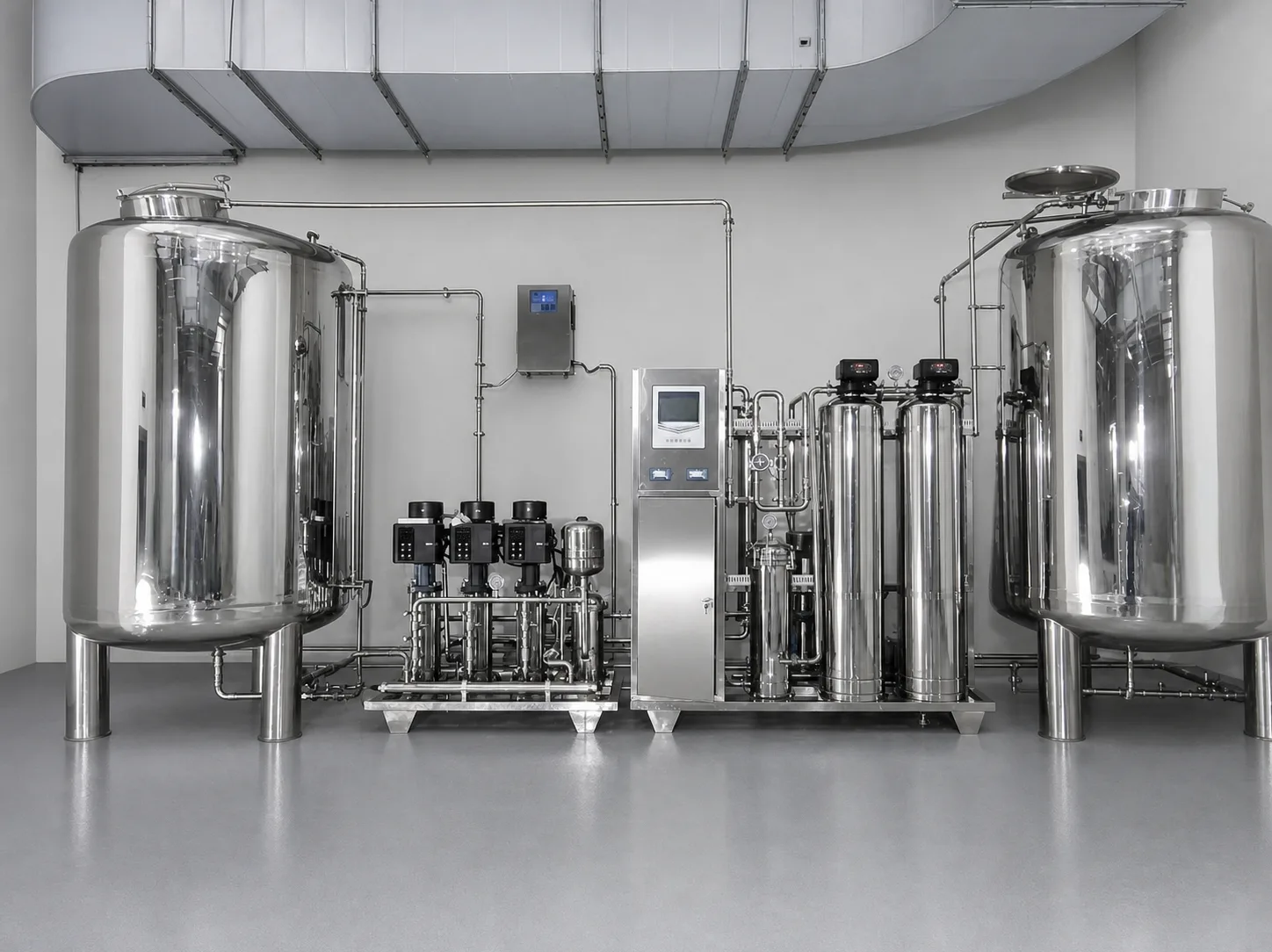
What does it take to open a water refilling station in the Philippines?
Three things: a commercial reverse-osmosis purification line sized to your daily gallon demand, the required DOH and local permits, and start-up capital that is dominated by equipment. Across owner accounts, the most common regret is not paying too much for machines — it is buying machines that keep breaking down. KONCHE, a water-treatment manufacturer in Shenzhen since 1997, builds the RO purification lines behind Philippine refilling stations and publishes this guide so the money decisions are made with real numbers.
On this page
- The business model — three real stations, three very different outcomes
- Equipment — what the line includes and how your water source changes it
- Capacity sizing — GPD and LPH, matched to daily containers
- Capital and monthly costs — owner-reported figures
- Permits — DOH, PNSDW 2017, NWRB, LGU
- Where to buy — local dealers and six supplier checks
- For equipment dealers — carrying KONCHE lines
Related: RO equipment page for Philippine stations · Drinking Water Systems · Reverse Osmosis Systems
What is a water refilling station, and what does it earn?
A water refilling station (WRS) purifies source water, fills reusable 5-gallon containers, and sells them per container — walk-in, by delivery, or both. Owners commonly report selling prices of ₱25–35 per container, reaching ₱50 in strong locations — the same water, priced by what the neighborhood will bear.
Real numbers reported by owners in Philippine business communities (2020–2026):
| Station situation | Price | Volume | Net income |
|---|---|---|---|
| Provincial station, 2 staff, tough competition | ~₱27/gal (avg) | ~2,000 gal/month | under ₱15k/month |
| Full operation, 5 staff + delivery truck | ₱18/gal (avg) | 400 gal/day | ~₱2,200/day (₱66k/month) |
| Station below a high-rise condo (60 floors × 76 units) | ₱50/container | ~200 containers/day | ~₱200k/month |
Owner-reported figures from public Philippine business discussions; not guarantees. Same business, monthly nets more than ten times apart — the difference is the last row: how many mouths are downstairs.
Two checks before committing to a location
- Find anchor customers first. One owner supplying a large company (~30 containers/day) said that without it, the station would have closed. Schools, eateries and offices give thinner margins but steadier volume than households — landing one or two before opening gives you a floor.
- "Everyone drinks water" is not a market study. This exact logic is mocked in owner communities — customers switch for price and convenience, not taste. Count the competing stations around you and estimate a realistic daily container count before committing.
What equipment does a water refilling station need?
The purification line for a typical Philippine station is:
- Pretreatment (sediment/multi-media filtration, activated carbon, optionally water softening) protects the RO membranes.
- RO removes dissolved salts and is the core of product-water quality.
- Post-carbon + UV + terminal filtration polish taste and control microbes before the container is filled.
KONCHE systems for this duty
Your water source decides the equipment configuration
Philippine stations draw from two very different sources, and this single fact changes what you should buy:
| Compare | Municipal tap water ("Level III") | Deep well / groundwater |
|---|---|---|
| Water quality | Already treated by the utility; relatively consistent | Varies by location; commonly higher hardness, iron, turbidity or salinity |
| Raw water cost | Monthly water bill | Nearly free water, higher electricity |
| Permit | None beyond the utility connection | NWRB water permit required for wells in most urban areas |
| Treatment burden | Standard configuration usually suffices | Stronger pretreatment required — multimedia, iron removal or softening ahead of RO, or membranes foul early |
- One provincial owner cut utility costs with a deep well — but noted urban wells need permits, and well water quality varies.
- A civil/sanitary engineer advising a new owner put it plainly: "verify first the quality of the water in the condo before buying." A laboratory water analysis of your actual source (₱1,500–3,000 at accredited labs) should precede any purchase, because the analysis determines the pretreatment stages you actually need.
In practice with KONCHE equipment: a station on municipal supply uses the standard configuration (sediment + activated carbon ahead of RO); a station on deep-well water adds reinforced pretreatment — multimedia filtration, iron removal or softening — selected against the water analysis. The RO stage itself stays the same class; KONCHE drinking water systems (0.25–50 m³/h, 304/316L wetted parts) are configured to match the report.
Why the cheapest equipment usually costs more
Across owner accounts, the most consistent complaint is not the initial price — it is repair frequency:
- One owner whose family invested over ₱2 million reported that monthly costs are dominated by equipment repairs — "even brand-new equipment breaks, especially the bottles."
- Another running 400 gallons/day budgets ₱750/day for machine maintenance as a standing line item — ₱22,500/month before a single peso of salary.
- A third summarized: repairs, absent staff and vehicle maintenance are the three recurring headaches of the business.
Cheap, under-specified equipment fails exactly where Philippine source water is hardest on it — fouled membranes from inadequate pretreatment, corroded housings, undersized pumps running hot. What durable equipment looks like, in KONCHE's published specification:
- 1-year whole-machine warranty; membranes, UV lamps, cartridges and other consumables excluded — their service life depends on your source-water quality.
- First-tier brand membranes and components (e.g. Dow, Hydranautics) selected for your feed-water scenario and quality targets.
- 304/316L stainless wetted parts where it matters, PLC control, and an English operation manual with every system.
- Membrane and cartridge replacement intervals stated per system — see the maintenance module on the RO systems page.
When you compare suppliers, weigh membrane brand and replacement cost, pump and RO vessel quality, frame material, spare-parts availability in the Philippines, warranty terms and written documentation — not just the sticker price.
Storage, rinsing and filling
Stations also need storage tanks, a container washing/rinsing area, and filling equipment. These sit downstream of the purification line and are typically sourced from specialist suppliers of bottle washers and filling machines — match their filling rate to your purification capacity so neither stage starves the other, and insist on food-grade (SS304 or better) contact surfaces wherever containers are washed or filled.
How to choose your system capacity (GPD and LPH)
Philippine equipment is conventionally rated in gallons per day (GPD) of product water; factory specifications usually quote liters per hour (LPH). They are the same capacity on different clocks: a 1,000 LPH system is ≈ 6,300 GPD on a 24-hour basis, or about 400 five-gallon containers per 8-hour shift.
| System class | ≈ m³/h | Indicative daily sales it supports* | KONCHE equivalent |
|---|---|---|---|
| 1,000 GPD | ~0.16 | ~400 containers/week; small walk-in station | custom build within the RO range |
| 3,000 GPD | ~0.47 | ~120 containers/day with delivery | 500 LPH Compact system |
| 6,000 GPD | ~0.95 | ~240 containers/day; multi-route delivery | 1,000 LPH Community system |
| 10,000 GPD | ~1.6 | large station or small dealership | custom build within the RO range |
*Rule of thumb from owner-reported data: about 60% of the water a station consumes becomes waste — jug washing, floor cleaning, machine backwashing. Size purification capacity at roughly 2–2.5× planned daily sales, or your machines become the bottleneck on your best days.
Working backwards from demand: 100 households ordering one container every 3–4 days ≈ 25–33 containers/day; add schools/eateries at 5–30 containers/day each. One owner's feasibility study planned around 120 jugs/day (≈12% of his surveyed local market) and started with a small 300 L/hour machine.
How much capital do you need?
A magnitude reference: equipment packages around ₱170k–430k; most complete setups (excluding land) land at ₱400k–700k; full self-builds can exceed ₱2M. Build costs vary by location — the figures below come from Philippine community discussions and published local supplier prices. Use them as a yardstick, not a quotation; what you actually get quoted is what counts.
| Item | Published magnitude | Source |
|---|---|---|
| Equipment package (entry to full configuration) | ₱168k – ₱430k | Published price lists of local equipment suppliers |
| Complete setup incl. permits and basic fit-out, excl. land | ~₱400k – ₱700k | Owner reports in local communities |
| Full self-build incl. premises, building, delivery vehicle | ₱2M+ | Owner reports in local communities |
Owner-reported figures, published for reference only.
One operating rule is worth knowing early: payroll and delivery dominate owners' monthly books — not utilities. Getting location and staffing right matters far more than saving on electricity.
What permits and standards apply?
- Sanitary permit from your city/municipal health office (initial inspection by a sanitary inspector) — required before operating.
- DOH operational permit for the refilling station, processed through the DOH regional office (doh.gov.ph).
- Product and source water quality must conform to the Philippine National Standards for Drinking Water (PNSDW 2017, DOH AO 2017-0010) — this applies to the raw/source water and the finished product water.
- Water testing: physical/chemical examination (results typically valid ~6 months) and a Certificate of Potability; owners report monthly bacteriological testing and annual heavy-metal testing as standing requirements.
- NWRB water permit if you drill a deep well rather than using the municipal supply (nwrb.gov.ph).
- Standard business registrations: barangay clearance, mayor's permit, BIR.
New owners budget roughly ₱20k for papers, and report that fines for incomplete paperwork are the expensive part — do the paperwork in order before equipment installation. (The seminars asked about in owner communities are usually the DOH-accredited training and LGU orientations tied to these permits.)
Franchise or set up independently?
Franchise (e.g. the AlkaViva package a young owner on r/phinvest planned around) gives you a turnkey setup, training, and a recognized brand — genuinely valuable if you have no technical background. The trade-offs are higher total cost, less freedom in equipment choice, and ongoing fees.
Independent setup costs less over time and lets you choose equipment matched to your actual water source and demand — but you carry the technical risk yourself, which makes supplier selection and source-water testing non-negotiable.
A third model owners mention: 24-hour automated water vending machines (coin/bill-operated, e.g. Master Watervendo), which cut staffing and extend selling hours in walk-up locations.
Running the station: operations that decide the outcome
- Your driver is the business. Experienced owners pay delivery staff on commission (commonly ~₱5 per container, plus allowances and mandatory benefits) — "if you pay fixed daily wages, good luck getting them to find customers."
- Go B2B first. Schools, eateries and offices bring thinner margins but consistent volume; one anchor client can be the difference between closing and surviving.
- Hygiene is visible marketing. Customers and inspectors notice gloves, container disinfection and a clean filling area. A simple daily checklist — container rinsing before every fill, disinfected filling area, sealed storage — protects both your DOH standing and your walk-in business.
- Maintenance discipline: scheduled membrane cleaning and replacement, daily machine checks, and realistic vehicle budgets — the loads run daily, and even new vehicles break.
- Expect a slow ramp. Owners report months of weak sales before revenue stabilizes, and staff turnover every 2–3 months. This is a full-time, labor-intensive business — someone reliable must always mind the shop.
Where to buy equipment: local dealers and KONCHE
Buy from a local equipment dealer — but walk in with your water analysis and ask for KONCHE-configured machines. The dealer gives you on-site installation, fast spare parts, and a technician who can physically show up — worth a lot when the station is your family's income. The sizing itself, KONCHE helps you with for free.
When you sit down with a dealer, hold the quotation to these six checks:
- Equipment configured to your water test report, not a generic package
- Stated recovery rate and membrane brand in the quotation
- Frame and wetted-part materials (stainless, not painted mild steel)
- Spare parts and consumables available in the Philippines, or shipped on schedule
- Documentation and start-up support — manuals, commissioning guidance and staff training, on-site or remote
- A written warranty tied to your source-water analysis
KONCHE manufactures these purification lines and supplies the Philippines through local equipment distributors — the distributor network is being built out, so ask us about purchase channels in your area. Planning a station? Send your source-water analysis and planned daily volume (contact form or WhatsApp) and we will return a free sizing recommendation matched to your water and volume — take it to your local dealers, compare, and order with confidence. See also the equipment page for Philippine stations.
If you sell or install refilling station equipment
This section is for readers in the equipment trade. KONCHE works with Philippine equipment dealers: factory-direct supply, configurations customized to each customer's water report, long-term consumables resupply — and your customers get our sizing support.
The hardest part of the refilling-station equipment trade is that water sources vary wildly — municipal supply is one thing, deep wells another. Sell a generic package and either the membranes die early or the customer pays for treatment they don't need, and the after-sales lands on you. With KONCHE you configure per order: pretreatment reinforced against the water report, RO and UV main lines shipped from the factory, membranes, cartridges and UV lamps supplied long-term. Your customer brings our sizing recommendation back to your counter to order. For cooperation details — supply terms, lead times, sample policy — contact us.
Frequently asked questions
Is ₱1 million too much to start with?
For a walk-in station inside a condo building, a civil/sanitary engineer advising a new owner estimated ₱140–200k for equipment and ~₱400k all-in — so yes, ₱1M is more than that scenario needs. ₱700k–₱2M matches full builds with vehicles and premises.
How long until I recover my investment?
Too wide for one honest answer. Owner-reported nets range from under ₱15k to about ₱200k per month, and the difference is location and volume. Run your own location's container estimate and pricing through the numbers — that is more reliable than anyone's story.
Can I run it part-time?
Owners consistently describe it as labor-intensive with staffing headaches; plan to be hands-on, especially in year one.
What water tests will I actually run?
Monthly bacteriological and annual heavy-metal testing per owner reports, plus physical/chemical examination and a Certificate of Potability for both source and product water under PNSDW 2017.
KONCHE systems for Philippine stations
Two standard configurations cover most Philippine refilling stations — full process details, features and maintenance on each system page:
Start with
your water report.
Send your water source (municipal or deep well), daily container target and any water analysis you have. KONCHE will recommend a configuration — sized to the report, in the 220V/60Hz Philippines version.