RO Systems for Water Refilling Stations in the Philippines
Equipment selection in plain language — for station owners, not engineers
- 0.25–50 m³/h
- Commercial RO range
- 97–99%
- Typical salt rejection
- Since 1997
- KONCHE manufacturing
A refilling station runs on one treatment line: filtration matched to your water source, an RO unit sized to your daily containers, and final disinfection. This page shows how it works, how to choose, and what maintenance costs.
Get a Configuration Quote ↗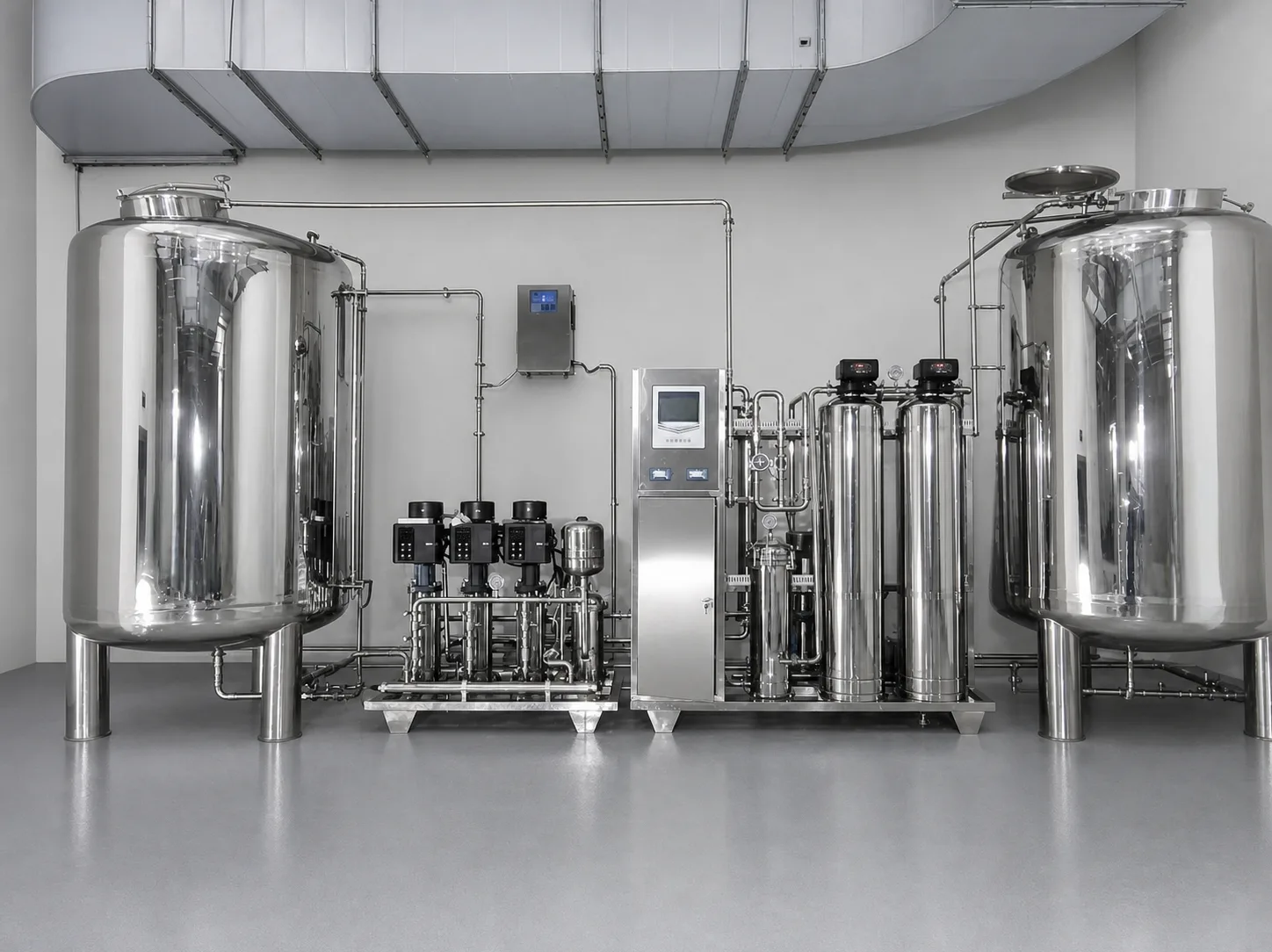
What equipment does a Philippine water refilling station need?
One integrated line: source-water tank and pump, filtration matched to your water source, an RO unit sized at 2–2.5 times your daily container sales, and UV disinfection before storage. KONCHE, manufacturing RO systems in Shenzhen since 1997, configures and supplies these complete lines for Philippine stations through local distributors.
On this page
- How the equipment works — five steps, no jargon
- Choosing the right equipment — by water source and daily output
- Maintenance costs — what to replace, and when
Related: Drinking Water Systems · Reverse Osmosis Systems · All KONCHE solutions
Five steps from source water to refill
Source tank & pump
Water from your municipal pipe or well is stored and fed at steady pressure.
Filtration
Sand and carbon filters remove particles and chlorine, protecting the RO membranes.
RO — the core
Pressure pushes water through membranes that typically reject 97–99% of dissolved salts. Some water goes to drain — plan your floor drainage.
UV disinfection
A final barrier against bacteria after RO, keeping stored water safe.
Storage & filling
Purified water sits in a covered tank and fills washed containers. A daily TDS check tells you all is well.
Equipment families: Single & Double Stage RO Systems · UF pretreatment · Low-Pressure UV sterilizers · Ozone systems
Choosing the right equipment
1. Start with your water source
Municipal supply and deep well are not interchangeable — the wrong filtration is the most common reason for early membrane replacement.
| Compare | Municipal / LGU piped supply | Deep well |
|---|---|---|
| Water character | Treated, chlorinated; quality varies by area | Often higher hardness, iron or salinity; varies well by well |
| Filtration needed | Sediment filter + activated carbon | Stronger multimedia filtration, iron removal, softening |
| Check first | A simple TDS reading of your supply | A full water analysis (TDS, hardness, iron) |
2. Match the RO unit to your daily containers
One 5-gallon container holds about 19 liters. Choose a system rated at about 2–2.5 times your daily sales — real output runs below rated output, and you need headroom for peak days.
| Containers sold per day | Purified water needed | Suggested system class |
|---|---|---|
| 100 × 5-gallon | ≈ 1,900 L/day (≈ 500 GPD) | 1,000–1,500 GPD |
| 200 × 5-gallon | ≈ 3,800 L/day (≈ 1,000 GPD) | 2,000–2,500 GPD |
| 400 × 5-gallon | ≈ 7,600 L/day (≈ 2,000 GPD) | 4,000–5,000 GPD |
Reference sizing. KONCHE confirms the final configuration from your water analysis after engineering review.
Maintenance costs
Plants fail through ignored maintenance far more often than faulty machines. Typical intervals:
| Item | Typical interval | Why it matters |
|---|---|---|
| Sediment / cartridge filters | 1–3 months | Clogged filters choke the RO pump |
| Activated carbon | 6–12 months | Old carbon lets chlorine damage membranes |
| Softener salt / antiscalant | Ongoing top-up | Controls hardness scale |
| RO membranes | 2–3 years | The expensive item — filtration quality decides lifespan |
| UV lamp | Replace yearly | Output fades before it visibly fails |
| Daily checks | TDS in/out, pressures | Catches problems while they are cheap |
Two buying tips that decide your maintenance bill: confirm who can service the plant locally before you buy it, and prefer industry-standard membranes and cartridges — any technician can source them. KONCHE builds its commercial RO systems (0.25–50 m³/h) with 304/316L stainless wetted parts and standard-size consumables — consumables reference.
What KONCHE supplies
Since 1997
Water-treatment equipment manufactured in Shenzhen, China, for overseas projects.
0.25–50 m³/h
Commercial RO lines covering small walk-in stations up to high-volume delivery operations.
304/316L stainless
Stainless wetted parts and industry-standard membranes, so consumables stay sourceable locally.
Distributor support
KONCHE equipment reaches station owners through Philippine equipment distributors.
Matched to your water
Municipal or deep-well configuration confirmed from your water analysis before quotation.
Commissioning & spares
Startup guidance and spare-part supply for the life of the plant.
Quick questions
How many GPD do I need for 200 containers a day?
About 1,000 GPD of purified water (200 × ~19 L). Applying the 2–2.5× rule, choose a 2,000–2,500 GPD class system.
How long do RO membranes last?
Typically 2–3 years with good filtration and on-time cartridge changes. High hardness, iron or sediment in feed water shortens membrane life.
Can one machine handle both municipal and deep-well water?
The RO stage can be the same class, but filtration differs (carbon-led vs iron/softening-led). Configure after a water analysis.
Tell us about
your water.
Send your water source (municipal or deep well), daily container target and any water analysis you have. KONCHE will recommend a configuration and connect you with a distributor serving your area.