Tanzania 500 L/h Camp RO and UV System
Tanzania · Delivered and operating since 2025 · Configuration view included
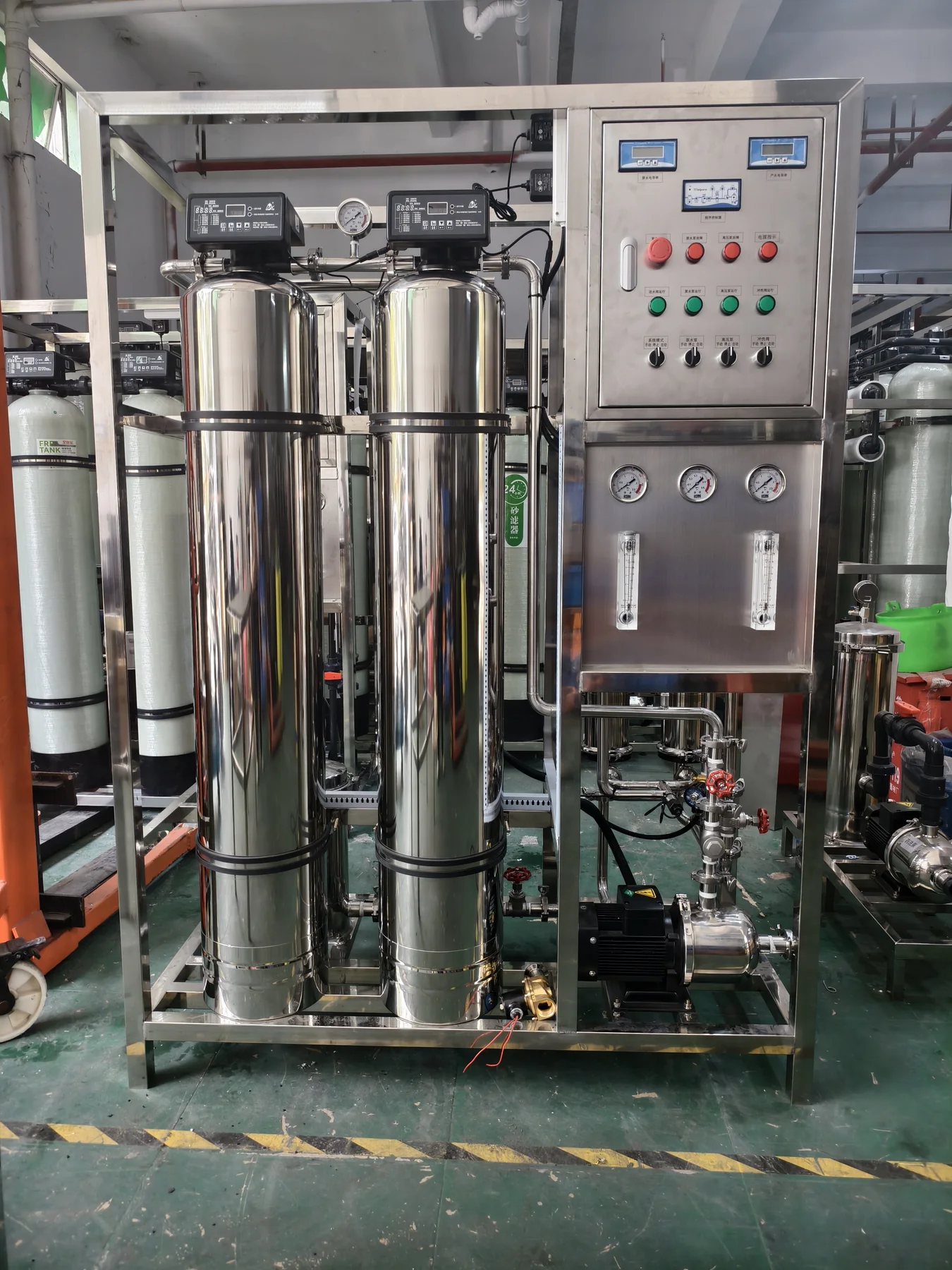
Konche (Shenzhen) Water Treatment Technology Co., Ltd. completed equipment delivery for this project, and the equipment was put into use in 2025. The operating 500 L/h RO and UV system supports drinking, kitchen, bar, ice-making and bottled-water demand for a Tanzania camp with about 75 people. Operating water quality remains subject to routine testing against the applicable local requirements.
- Location
- Tanzania; camp and customer identity withheld
- Application
- Camp drinking, kitchen, bar, ice-making and bottled-water supply
- Feed-water condition
- Well water
- Installed capacity
- 500 L/h RO permeate
- Installed treatment train
- Media filtration, activated carbon, cartridge filtration, single-pass RO and inline UV
- Status
- Delivered and operating since 2025
Which RO is best for ground water?
The right RO system is selected from the complete well-water analysis, required drinking-water target and daily demand. For this camp, the installed system pairs a compact 500 L/h single-pass RO unit with pretreatment, storage and downstream UV.
How does an industrial reverse osmosis system work?
The installed treatment train uses feed tank and booster pump → multimedia filtration → activated-carbon filtration → antiscalant dosing → 5 µm cartridge filtration → single-pass RO → inline UV → product-water tank. Its controls include product-tank level start and stop, a float switch, dry-run protection, automatic flushing, manual and automatic modes, a high-pressure-pump soft starter and a conductivity meter.
Can RO water be used for drinking?
RO can form the main desalination step, but drinking-water acceptance also requires suitable pretreatment, disinfection, hygienic storage and outlet-water testing. The final TDS, microbial and regulatory limits should be confirmed for the camp's location and intended uses.
What is the best RO system for drinking water?
Capacity alone is not enough. The installed system combines a 500 L/h production rate with storage around a demand basis of about 1,500 litres per day for 30 guests and 45 staff. Peak occupancy, kitchen and ice demand, operating hours, power reliability and storage determine this system; other camp projects may also need to account for laundry demand.
Camp water-system sizing inputs
Provide a complete well-water report, occupancy and daily demand, peak draw, storage plan, power supply, backup-power needs, intended uses and the applicable drinking-water target. These inputs determine pretreatment, membrane selection, UV sizing, storage and the testing plan.
Plan a camp water-supply system.
Share the well-water analysis, occupancy, daily demand, storage plan, power conditions and water-quality target.
Review Project Fit ↗