Tanzania 2 m³/h Brackish-Water RO System
Tanga, Tanzania · Delivered and operating since 2025 · Capacity stated per unit
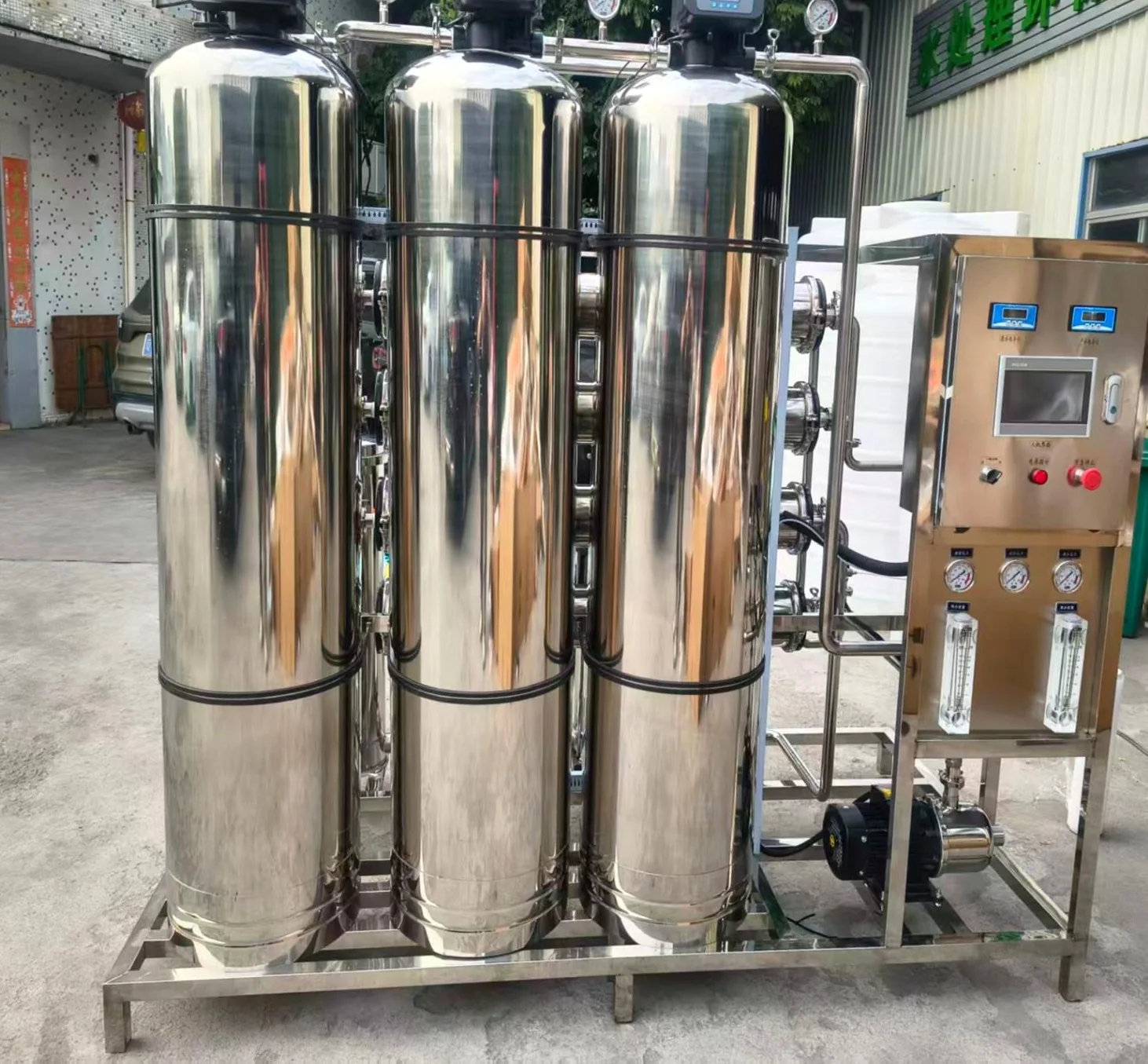
Konche (Shenzhen) Water Treatment Technology Co., Ltd. completed equipment delivery for this project, and the equipment was put into use in 2025. Each installed RO unit is rated at 2 m³/h for potable-water production from coastal groundwater in Tanga, Tanzania; seawater intrusion defines the salinity condition.
- Location
- Tanga, Tanzania; customer identity withheld
- Application
- Potable-water production and constant-pressure supply
- Feed-water condition
- Coastal brackish groundwater with seawater intrusion treated as the salinity condition
- Installed capacity
- 2 m³/h per unit
- Installed treatment train
- Three-vessel pretreatment, cartridge filtration, single-pass BWRO, UV and pressure supply
- Status
- Delivered and operating since 2025
Does reverse osmosis remove salinity?
RO is used to reduce dissolved salts in brackish groundwater. In this installed system, the coastal well-water condition calls for pretreatment ahead of a single-pass BWRO stage, followed by UV and constant-pressure delivery.
How does an industrial reverse osmosis system work?
The installed treatment train uses raw-water storage → booster pumping → quartz-sand filtration → activated-carbon filtration → sodium softening → 5 µm cartridge filtration → single-pass BWRO → product-water storage → UV → variable-frequency constant-pressure supply. Its controls use PLC and touchscreen functions for tank levels, pumps, protection, automatic operation and membrane cleaning.
Can RO water be used for drinking?
RO-treated water can be prepared for potable use when the full system includes appropriate pretreatment, disinfection and hygienic storage, and when the final water passes the applicable drinking-water tests. Conductivity or salt rejection alone is not enough to establish potability.
How to size a reverse osmosis system?
Submit a representative water analysis, seasonal salinity range, required daily volume, operating hours, storage and pressure requirements, electrical supply, concentrate-discharge route and the applicable water standard. The design should then be checked with a membrane projection and an acceptance sampling plan.
Review a coastal well-water project.
Share the water analysis, seasonal salinity, required flow, storage, pressure duty and concentrate route.
Review Project Fit ↗