100 m³/h Rose-Irrigation RO System
Location withheld · Delivered and operating since 2025 · Project equipment photographs
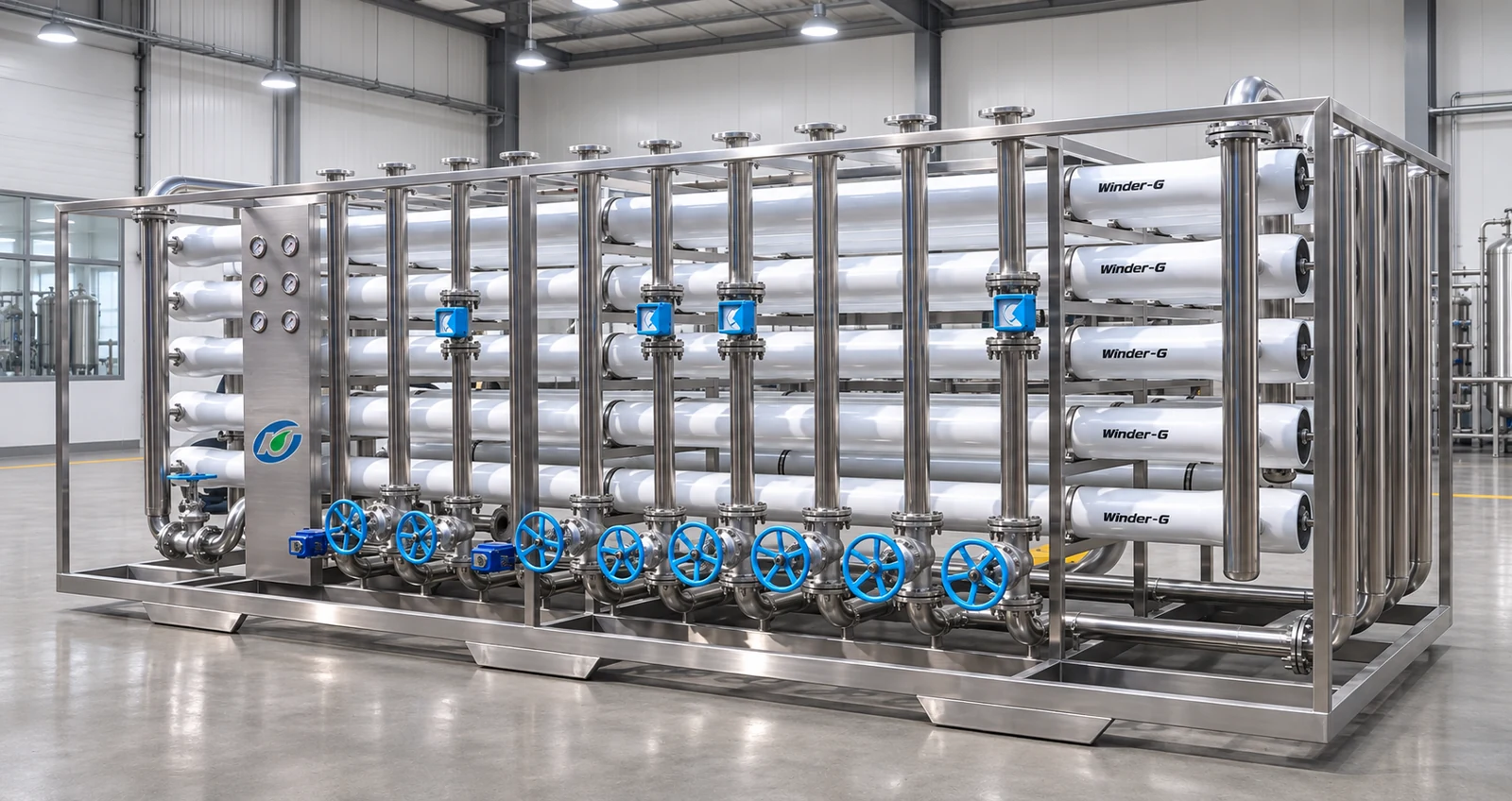
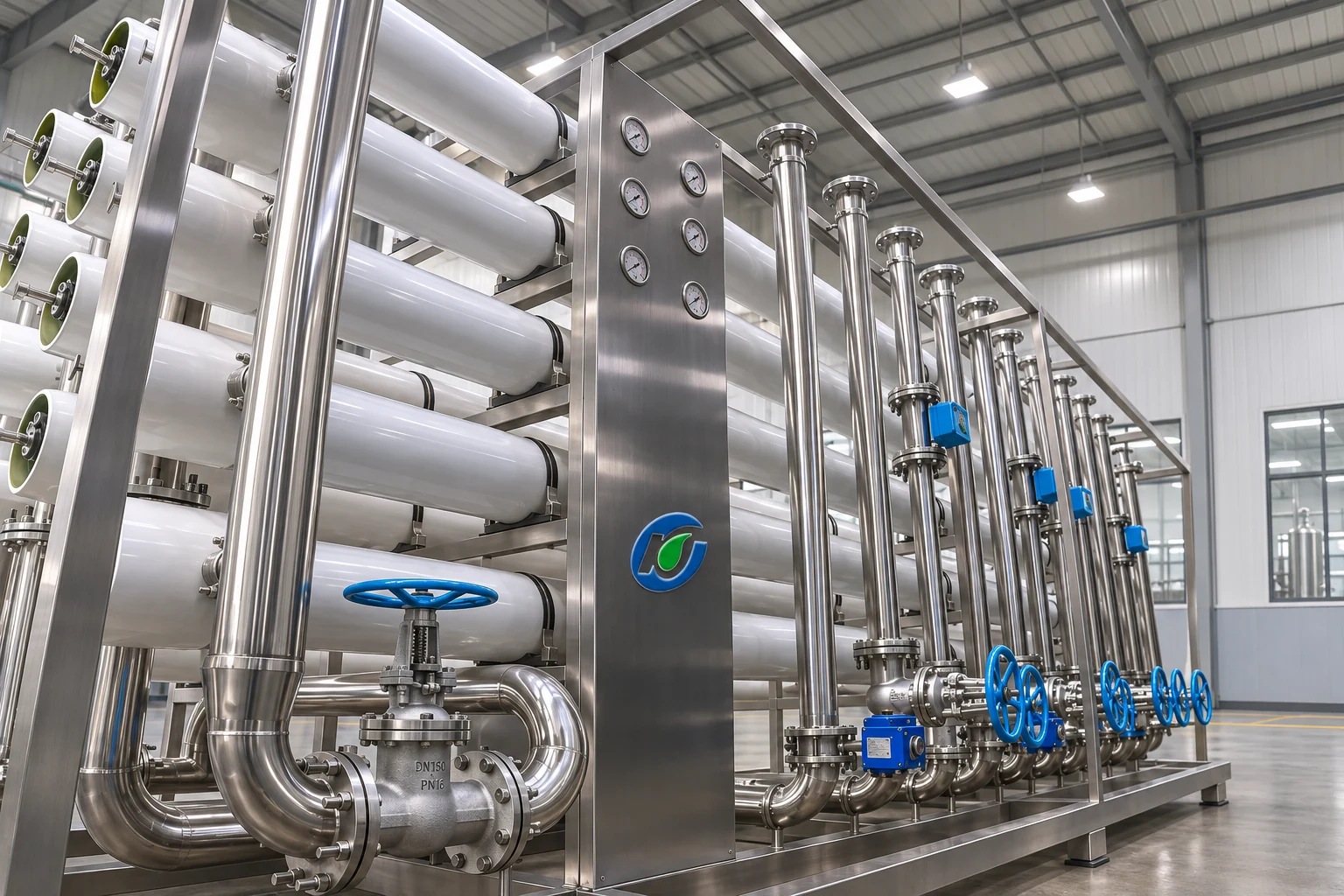
Konche (Shenzhen) Water Treatment Technology Co., Ltd. completed equipment delivery for this project, and the equipment was put into use in 2025. The 100 m³/h installed system treats local surface water with elevated salinity before irrigation at a large commercial rose-growing facility.
- Location
- Withheld
- Application
- Irrigation-water treatment for commercial rose cultivation
- Feed water
- Local surface water described as saline
- Installed capacity
- 100 m³/h
- Installed treatment train
- Pretreatment followed by reverse osmosis
- Status
- Delivered and operating since 2025
Does reverse osmosis remove salinity?
RO reduces dissolved salts by forcing water through semipermeable membranes under pressure. In this operating system, the installed 100 m³/h treatment train uses pretreatment to protect the RO stage before the product-water stream is sent to the irrigation network. The 100 m³/h figure is the installed capacity rating, not a measured salinity result.
Is reverse osmosis water good for watering plants?
RO water can provide a lower-salinity base for irrigation, but the final water still needs the right mineral balance. Crop sensitivity, soil, drainage, fertigation and any blending with untreated water determine the target composition.
What is the acceptable salt content for irrigation water?
There is no single limit for every crop or site. The target should consider electrical conductivity, sodium, chloride, boron and other ions together with crop tolerance, soil conditions, drainage and the fertigation plan.
Do you really need reverse osmosis for irrigation water?
RO is justified when source-water salinity or specific ions exceed the crop, soil, drainage or fertigation limits and cannot be managed by blending or simpler treatment. The decision requires a full source-water analysis, seasonal flow and salinity, irrigation volume, crop and soil limits, fertigation plan, blending strategy, concentrate route, operating hours, storage and the target product-water composition.
Review irrigation-water RO requirements.
Share the surface-water analysis, irrigation demand, crop and soil limits, blending plan and concentrate route.
Review Project Fit ↗